
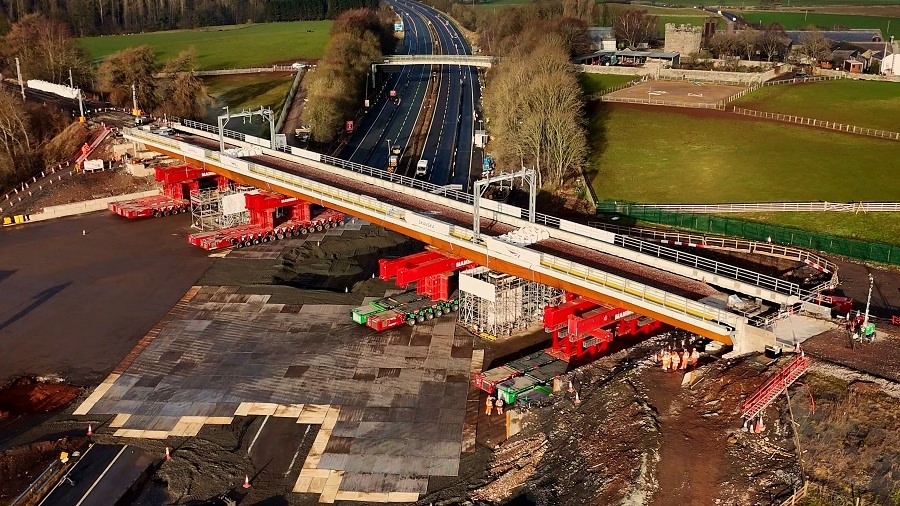
The M6 motorway in Cumbria reopened 13 hours earlier than planned after a new 4,200-tonne railway bridge was moved into place, reports Peter Brown.
Work on the £60 million project was carried out on a second successive weekend, which meant significant closures and rerouting via the A6 between Penrith and Shap.
The new 130-metre-long structure was manoeuvred into place using self-propelled modular transporters supplied by Mammoet.
Christian Irwin OBE, Network Rail North West and Central region Capital Delivery director, said: “We’ve been in close contact with National Highways throughout so we could capitalise on that and get the M6 reopen over half a day ahead of schedule to alleviate pressure on local roads.
“I’d like to once again thank drivers for adhering to the road diversions, and also thank the local communities impacted by them this weekend, so we could carry out this vital work to secure journeys for both road and rail users in the future.”
Steve Mason, National Highways programme delivery manager, said: “We’d like to once again thank motorists, and particularly local residents, for their patience and support while these works have been ongoing. We’re pleased to have been able to lift the diversion routes much earlier than planned.
“This is the first time in recent memory the M6 has been closed for whole weekends and follows years of careful planning with Network Rail. Some 48,000 vehicles use this section of the M6 daily but we chose a time of the year when traffic volumes are at their lowest.
“This was an incredibly complex operation and reopening the M6 13 hours early is a tremendous achievement. Despite severe weather conditions, the teams involved worked tirelessly to deliver this vital, one-in-a-lifetime project to future-proof one of the most important railway lines in the country.”

On the move: it took around three hours to move the new 4,200-tonne steel and concrete bridge into position on Saturday morning on machines called SPMTs (self-propelled modular transporters). The machines had a total of 608 wheels to carry that load. The new bridge has a design life of 120 years (source: Skanska).


